

We’ve all been there. You’re in the garage, the music is up, and you’re finally tackling that stubborn harmonic balancer or rear bearing. You’ve got the puller rigged up, you start cranking the wrench, and then it happens—the “crack.”
If you’re lucky, it was just the part breaking free. If you’re unlucky, you’re looking at a snapped puller bolt and a projectile that just narrowly missed your headlight (or your forehead).
At Orion Motor Tech, we know that when it comes to pullers, “good enough” usually isn’t. Here is why the metallurgy behind your tools is the difference between a successful Saturday and a trip to the emergency room.
1. The Physics of the “Pull”
Pulling a frozen gear or pulley isn’t just about strength; it’s about tension and torque. When you tighten a puller, you are essentially creating a mechanical tug-of-war.
- Cheap Steel: Under extreme loads, low-grade steel “stretches.” This deformation leads to structural failure.
- High-Grade Steel: Materials like Heat-Treated Carbon Steel or Chrome-Moly are designed to maintain their shape under several tons of pressure.
2. The Danger of “The Snap”
When a tool made of inferior metal fails, it doesn’t just bend—it shatters. Because the tool is under high tension, a failure releases all that stored energy instantly. High-grade, heat-treated steel is engineered to have a higher “ultimate tensile strength,” meaning it can handle the literal tons of force required to pop a rusted bearing without turning into shrapnel.
3. Precision Threads Matter
A puller is only as good as its center screw. Cheap pullers often feature soft threads that “gall” or flatten out under pressure. Once those threads deform, the tool is useless.
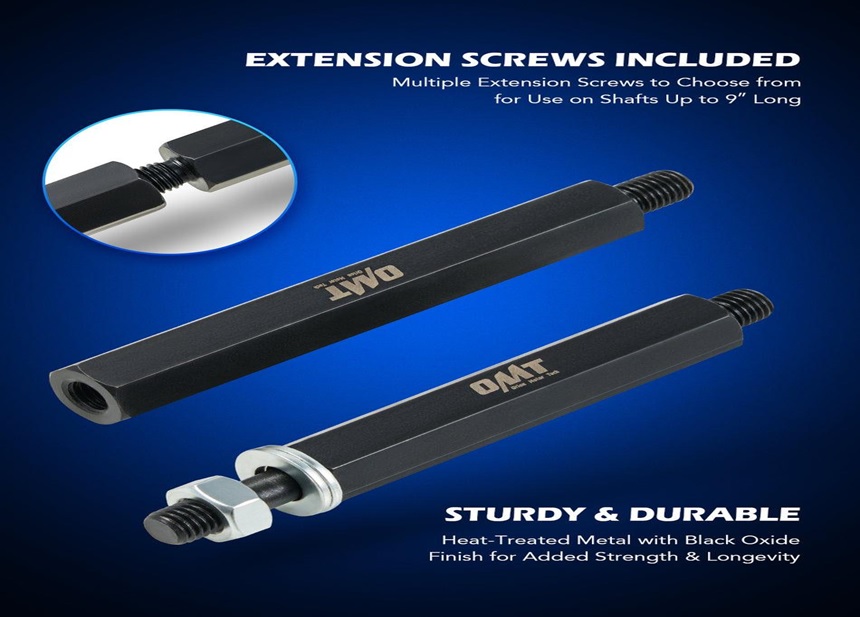
The OMT Standard: We utilize precision-machined, blackened threads. The black oxide coating isn’t just for looks—it reduces friction and prevents corrosion, ensuring the screw turns smoothly even when the pressure is on.
4. Avoiding the “False Economy”
It’s tempting to buy the cheapest puller set on the shelf. After all, it’s just a piece of metal, right? Wrong. * A cheap tool snaps, potentially damaging the vehicle’s crankshaft or housing.
- A high-grade tool does the job the first time and stays in your toolbox for the next decade.
Buying quality isn’t an expense; it’s insurance.
The Orion Edge: Built for the Pressure
At Orion Motor Tech, our puller sets aren’t just thrown together. We use heavy-duty components designed to withstand the rigors of a seized engine bay. Whether it’s our Heavy-Duty Gear Puller Sets or our Slide Hammer Kits, we prioritize:
- Forged Construction: For maximum grain strength in the metal.
- Heat Treatment: To ensure the tool is hard enough to resist wear but tough enough to resist snapping.
- Corrosion Resistance: Because tools shouldn’t rust just because they live in a garage.
Don’t let a $20 savings turn into a $2,000 repair bill. When you’re dealing with press-fit parts that have been stuck for a decade, trust the chemistry and the craftsmanship of high-grade steel.
Gear up, stay safe, and pull with confidence.
